
Periodontics
Periodontics - Gum Disease
Periodontal simply means "the tissue around the teeth." Periodontists specialize in the treatment and surgery of this area, which is often characterized by gum disease. Plaque is the most common element causing gum disease.
Unfortunately, periodontal-related problems are often discovered after they have persisted for an extended period of time. Proper oral hygiene, daily dental care and regular dental checkups will minimize the risk of gum disease. Gum disease ranges from mild (gingivitis) to moderate to severe periodontitis. Treatments are available for every case of gum disease.
Common problems associated with gum disease:
- "Long" teeth (receding gum lines expose the root portions of your teeth)
- Discolored or deteriorating tooth structure
- Gum depressions (holes in between the teeth in the gum tissue)
- Infected gum line (discoloration or inflammation of the gum tissue)
- Tooth loss or tooth movement
The effects of gum disease can be damaging to your dental health. However, through proper preventive care and oral hygiene, you can avoid problems associated with gum disease.
Your clinical examination in our office includes periodontal evaluation.
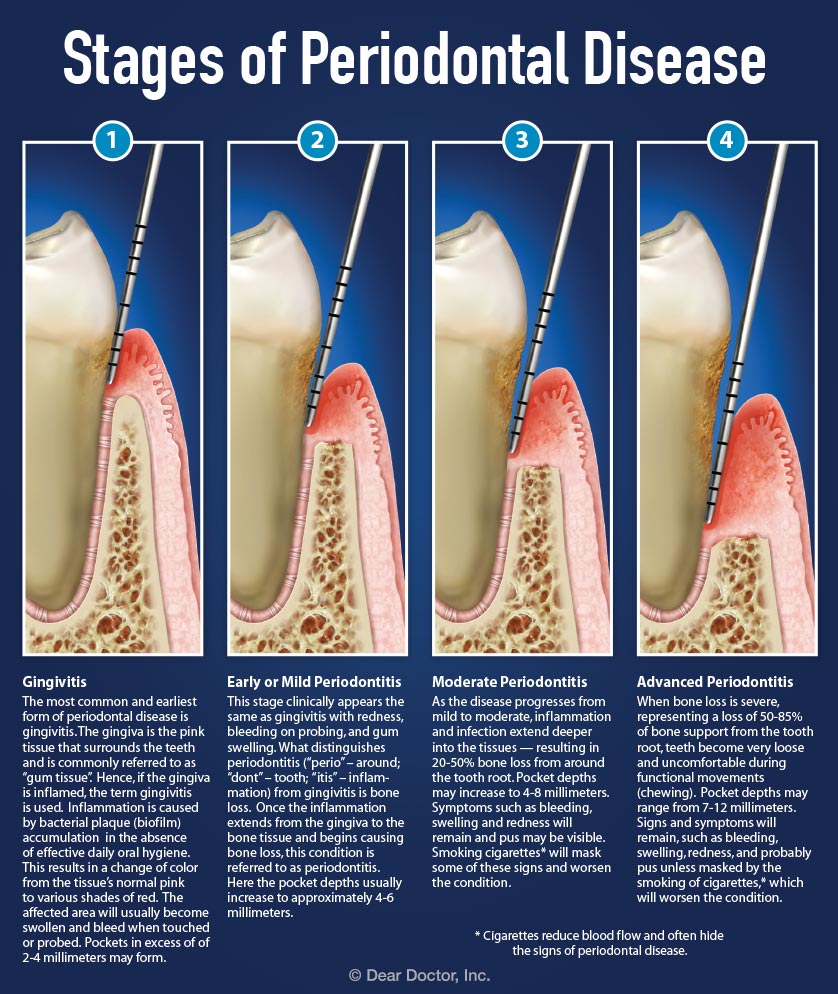
Can Gum Disease Be Reversed?
- Gingivitis: Yes, completely. With appropriate treatment and a professional cleaning, gum tissue can heal completely.
- Mild to Moderate Periodontitis: Somewhat. It can be controlled, and its progression prevented. Damaged bone or tissue won't regenerate fully on its own, but the condition can be stabilized effectively.
- Severe Periodontitis: Managed, not reversed. More advanced cases require ongoing maintenance and occasional surgical procedures. The use of bone grafts or regenerative procedures can help restore some architecture, but early periodontal disease treatment at North Valley Dentistry is always better.
Treatment Options at Each Stage
- Professional Cleaning (Prophylaxis): Used for the treatment of gingivitis. Completed as part of a routine dental visit. Cleans between teeth around the gingival margin.
- Scaling and Root Planing: A non-surgical deep cleaning for early to moderate periodontitis. Typically performed in sections under local anesthesia. Most patients tolerate it well.
- Antibiotic Therapy: Sometimes in conjunction with deep cleaning. May be topical (applied directly in gum pockets) or oral. Aids in eliminating bacteria that brushing cannot access.
- Surgical Treatments For Advanced Cases: Includes flap surgery, bone grafts, or guided tissue regeneration. Restores structure where significant damage has occurred.
- Periodontal Maintenance: Patients return for periodic maintenance every 3–4 months after treatment, rather than 6 months. It maintains low bacterial levels and measures gum pocket depth over time.
Connection Between Periodontal Disease & Systemic Conditions
- Systemic Inflammation: Chronic gum infections elevate inflammatory markers (like C-reactive protein and interleukin-6) in the blood.
- Bacterial Translocation: Oral bacteria can travel through the bloodstream to distant organs or get aspirated into the lungs.
- Bidirectional Links: Systemic conditions can worsen gum disease, and severe gum disease can complicate systemic health.
Affected Systemic Conditions
- Cardiovascular Disease: Contributes to arterial inflammation, atherosclerosis, and high blood pressure.
- Diabetes Mellitus: Worsens insulin resistance and makes blood sugar harder to control.
- Respiratory Issues: Aspiration of oral bacteria can lead to pneumonia or worsen COPD.
- Cognitive Decline: Pathogens and inflammation are linked to the progression of Alzheimer's disease.
- Pregnancy Complications: Associated with a higher risk of preterm birth and low birth weight.
Ready to book your visit?
Our team is here to answer your questions and help you plan care that fits your goals.